Rebonded Hair Care in Winnipeg: Wash Days, Heat and the First Week
Rebonded hair care is mostly about patience. The first few days decide how sleek the new shape looks, and a few simple habits keep it that way for months. The short answer: wait about 72 hours before your first wash, keep your hair loose and dry, skip tight clips and ties, and then use gentle products and controlled heat.
Most stylists follow these general rules, but your stylist may give you a slightly different timing for your hair. Use this guide as your baseline, and follow any instructions you get after your visit.
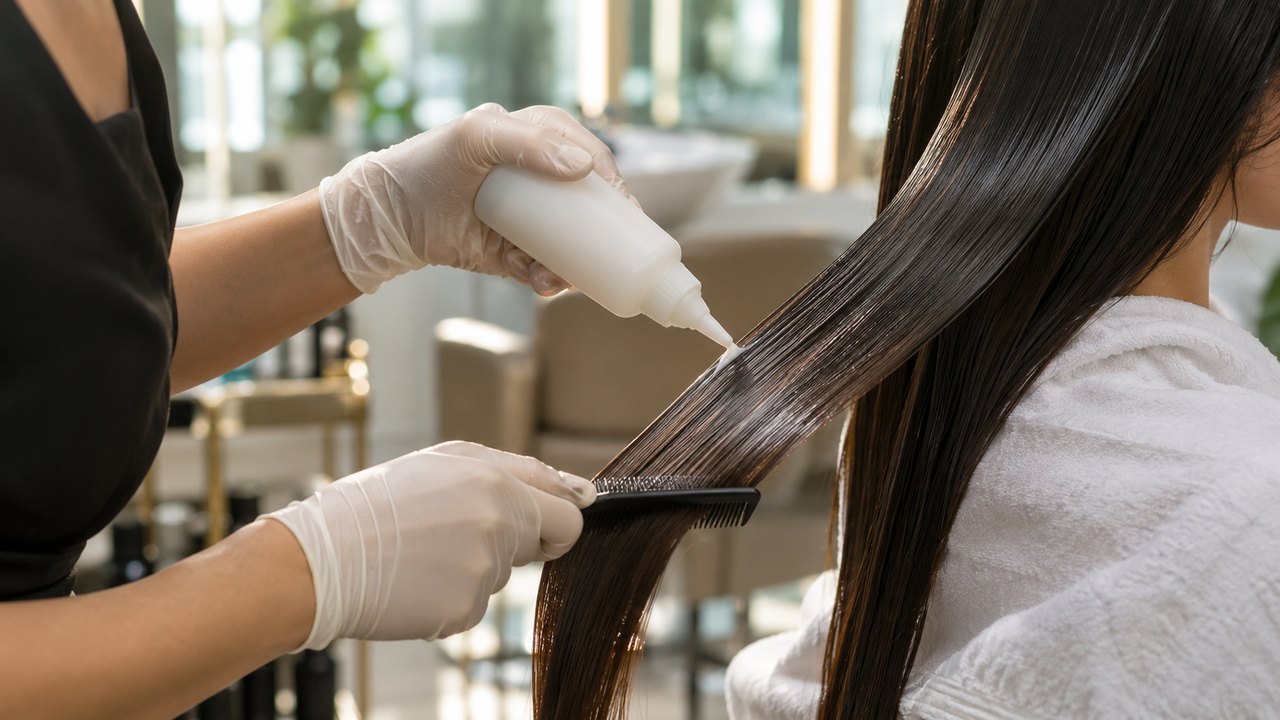
Why the first three days matter
Rebonding reshapes the internal bonds of the hair and then sets them in the straighter shape. Those bonds need time to settle, so water, friction and heavy pressure in the first few days can change how the hair falls.
That is why most stylists ask clients to wait before the first wash. If hair gets wet too soon, the ends can dry with bends that were not there after the appointment.
What to skip in the first week
- Washing for about 72 hours after your visit
- Tight ponytails, buns, clips and headbands, which can leave a crease in the new shape
- Sleeping on a tight braid or wrapping wet hair in a towel
- Chlorinated pools and hot tubs for at least a week
Loose styles are the safest choice until the waiting period is over. A crease formed while the bonds are still settling can stay visible in the straight look.
Washing and styling after the wait
Once the wait is over, wash with a gentle, sulfate-free shampoo and a conditioner that stays light at the roots. Focus the shampoo on the scalp and let the foam rinse through the lengths, rather than rubbing the hair against itself.
Blow-dry with a brush and work in smooth sections from root to end. Always use a heat protectant, and keep the flat iron or dryer on a moderate setting. Repeated high heat on the same section is the fastest way to make the ends look dry and dull.
Rebonded hair care every day
A small amount of leave-in cream on the lengths keeps the hair soft and glossy. Keep heavy product away from the roots so the straight shape looks light at the scalp rather than weighed down.
A satin pillowcase reduces friction overnight. On busy days, a loose, low braid is kinder to the new shape than a tight one.
How to tell the routine is working
Sleek hair that stays smooth at the roots and falls easily at the ends is a good sign. If the ends start to look frizzy or dry within the first two weeks, look at your habits first. Drying with a rough towel, skipping conditioner and using heat every day are the three most common causes.
Frizz at the ends is usually a moisture problem rather than a sign the treatment has failed. Pat hair dry instead of rubbing it, add a small amount of leave-in cream to the lengths, and give the ends a break from heat for a few days.
How long the result lasts
Rebonding usually looks its best until new growth shows at the roots, which often takes several months. The lengths stay straight, while the new hair grows in with its natural pattern, so a touch-up on the roots keeps the look even.
Rebonding takes time for the treatment, the set and the final blow-dry, so plan for the full appointment. Our Rebonding / Hair Straightening is a 180-minute visit, From $149. Book your visit here when you are ready.
When to tell your stylist
If your scalp stings, burns or feels raw after the treatment, tell your stylist right away. Hair that feels unusually stiff or gummy, or that snaps when it is combed wet, also needs a check before any heat or chemical touch-up.
Next steps
If you are still deciding between rebonding and keratin smoothing, our rebonding and smoothing comparison guide lays out who each option suits. For a similar first-week routine after a perm, read our long hair perm aftercare checklist.
Ready to plan your straight-hair visit? Book your rebonding visit at Zavira and keep the first week simple.